Turns out “Just Do It” still works—if you do it right.
I can’t tell you the exact moment my love affair with Nike began, but I can tell you the first scene in the movie: I was 12 years old, and Ronaldinho was turning football pitches into samba stages. And yes—this is coming from a madridista. I know, I know… please don’t revoke my membership card.
Around that time, Nike dropped what I still think is the most beautiful boot line ever made: the Total90. Elegant. Sleek. The kind of boot that looked fast even when it was sitting in the box. Naturally, I had to get the same pair Ronaldinho wore. I figured if I wore them, I’d play like him. Spoiler alert: I didn’t. Turns out the elasticos are not pre-installed.
But Nike had me. Not just because of the gear, but because they were master storytellers. They didn’t sell products—they sold goosebumps.
There was The Mission (both ad and game), with Davids, Figo, and Totti battling ninjas for a football. Write the Future for the 2010 World Cup, with Cannavaro, Rooney, Ronaldinho, and CR7 guest-starring in The Simpsons. The Last Game, where animated legends took on their robot clones. The bold Colin Kaepernick ad. And my personal favorite: Crazy Dreams Take Crazy Effort, celebrating Rafa Nadal’s 16 years at the top without ever taking a day off.
All of these ads had one thing in common: authenticity. They had personality, a special flavor that gave people chills. They weren’t just commercials—they were cultural moments. I’ve always praised Nike for this because, honestly, these ads weren’t just entertainment. They were cinematic events that made you want to do more, try harder, and maybe even actually use that gym membership you keep paying for. They were a big part of why I fell in love with sports in the first place.
And it wasn’t just the campaigns. It was the roster. Ronaldinho, Ronaldo Nazário, Figo, Cristiano, Neymar, Iniesta, Nadal, Pau Gasol, Michael Jordan, Kobe Bryant, Tiger Woods… Nike’s entire contact list was basically the definition of “GOAT.”
Then… something changed. The brand still had the athletes, but the aura felt off. It was as if “Just Do It” became “Just Do… something? Anything?”
When John Donahoe stepped in as CEO, Nike went through some big—and controversial—shifts.
First, they changed their category focus, moving from sport to product. On paper, it probably looked clean and efficient. In reality, it meant significant layoffs and a lot of hard-earned sports expertise vanishing overnight. The kind of institutional knowledge you can’t just hire back in.
Second, they shifted toward becoming a Direct-to-Consumer company, slashing their reliance on distributors. This might have made the spreadsheets look happy, but it also strained—and in some cases outright damaged—relationships with retail partners who had championed the swoosh for decades.
Third, they overhauled their marketing model. Gone was the local focus that understood regional cultures and fan bases. Instead, everything was centralized, with strategy built on data. The end result? A pivot to performance marketing. Measurable? Sure. Magical? Not so much. The Nike that once told unforgettable stories was now tracking click-through rates.
The changes felt like they were stripping away the soul of the brand. And that impacts everything: how marketing teams work, how they interpret the brand, how they represent it. If you’re selling pens, fine—personality doesn’t matter, functionality does. But when you’re selling sports? You’re selling emotions. Goosebumps are your currency. Without them, you’ve lost the plot.
The magic slipped. The brand that used to lead was now reacting, and a rising tide of hungry niche brands started to catch up. For the first time, Nike looked less like the king of the hill and more like the guy halfway down it, tying his shoelaces.
And then came Scary Good.
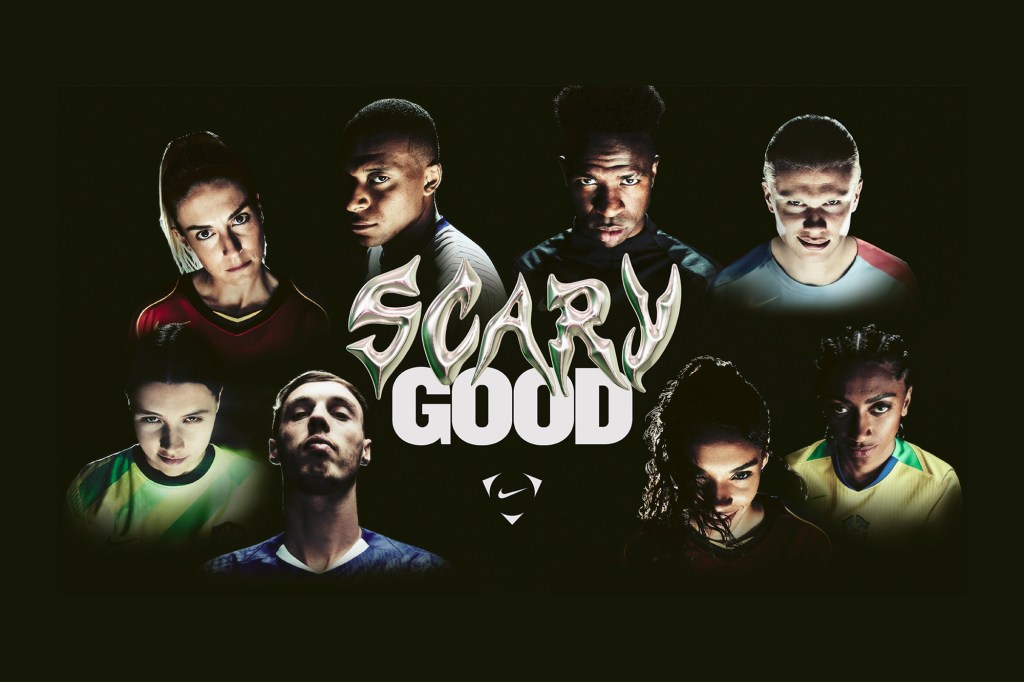
For the first time in years, Nike feels alive again. The storytelling is sharp, fun, and gloriously weird. Mbappé’s ad has a nightmare-chase energy, Alexia Putellas and Cole Palmer bring cheeky twists, and Haaland goes full WWE fever dream. Each one feels different, intentional, and most importantly—watchable twice in a row. Even better, the campaign drops at the perfect time: with the 2026 World Cup on the horizon, Nike has a golden shot to reclaim football’s marketing throne.
This is what we want from brands: personality, conviction, and a sense of fun. Sports are emotional, aspirational, sometimes ridiculous—and that’s the sweet spot Nike used to own. They’re tapping it again, making us believe, just for a second, that maybe we could be great… if we lace up the right pair.
So please, Nike. “Just Do It.” But this time, keep doing it like this.
And since you’ve already re-released the Total90s… don’t be surprised if I’m out there trying elasticos again.

 The Sideline Report
Leave a comment